Jacob Boehme
1575–1624
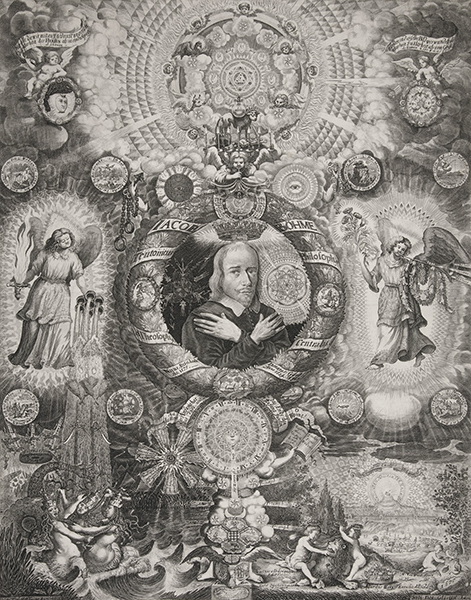
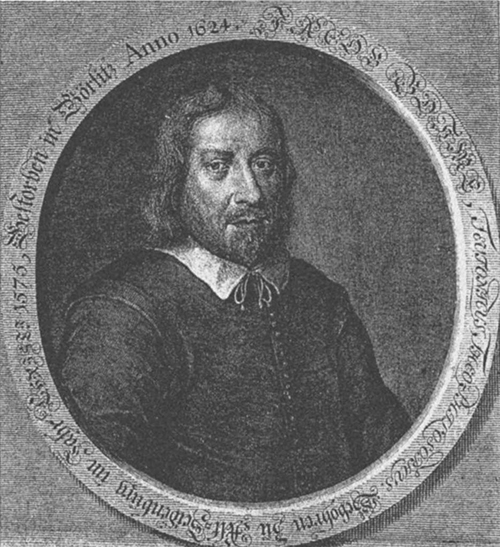
Jacob Boehme (1575–1624), also known as Jakob Böhme, was a German philosopher, Christian mystic, and Lutheran Protestant theologian. Born in the town of Alt Seidenberg, now part of the municipality of Görlitz in Saxony, Germany, Boehme was a shoemaker by trade before his theological insights and mystical visions led him to write extensively on spirituality and the nature of God. His work deeply explores the interrelationship between God, man, and the cosmos, blending thoughts from the Christian mystic tradition with his own unique insights. Despite facing significant opposition and controversy from church authorities during his lifetime, Boehme’s writings would posthumously influence a wide range of philosophical and theological thought in both Western and Eastern traditions.\n\nBoehme’s major works include “Aurora” (1612), which attracted attention and censure almost immediately upon its unofficial publication, leading to a temporary writing ban enforced by the local ecclesiastical authorities. His later works, such as “The Three Principles of the Divine Essence” and “The Threefold Life of Man,” articulate complex visions of the spiritual structure of the world, heavily influencing later mystics and philosophers. Boehme’s ideas provided foundational thoughts for later theological movements such as German Romanticism and Idealism. Notable figures influenced by his work include Hegel, Schelling, and Blake, attesting to the profound and lasting impact of his mystical and theological insights on the broader philosophical landscape.