
Authors
Explore the great thinkers, mystics, and philosophers whose works are preserved in the Sacred Archive.
8 authors
Al-Ghazali
1058–1111
Abū Ḥāmid Muḥammad ibn Muḥammad al-Ghazālī was a Persian polymath, philosopher, and mystic who is considered one of the most influential Muslim thinkers in history.
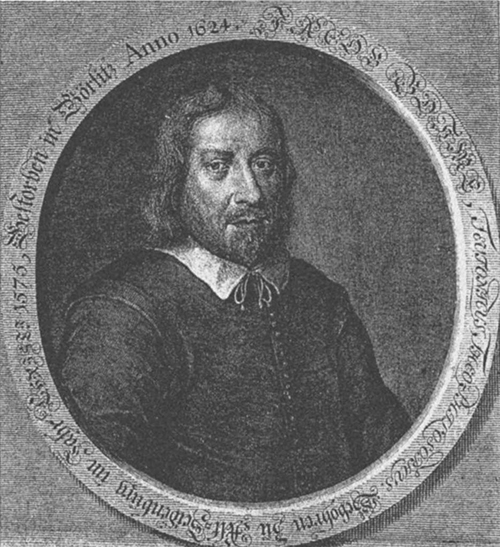
Jacob Boehme
1575–1624
Jacob Boehme (1575–1624), also known as Jakob Böhme, was a German philosopher, Christian mystic, and Lutheran Protestant theologian. Born in the town of Alt Seidenberg, now part of the municipality of Görlitz in Saxony, Germany, Boehme was a shoemaker by trade before his theological insights and mystical visions led him to write extensively on spirituality and the nature of God. His work deeply explores the interrelationship between God, man, and the cosmos, blending thoughts from the Christian mystic tradition with his own unique insights. Despite facing significant opposition and controversy from church authorities during his lifetime, Boehme’s writings would posthumously influence a wide range of philosophical and theological thought in both Western and Eastern traditions.\n\nBoehme’s major works include “Aurora” (1612), which attracted attention and censure almost immediately upon its unofficial publication, leading to a temporary writing ban enforced by the local ecclesiastical authorities. His later works, such as “The Three Principles of the Divine Essence” and “The Threefold Life of Man,” articulate complex visions of the spiritual structure of the world, heavily influencing later mystics and philosophers. Boehme’s ideas provided foundational thoughts for later theological movements such as German Romanticism and Idealism. Notable figures influenced by his work include Hegel, Schelling, and Blake, attesting to the profound and lasting impact of his mystical and theological insights on the broader philosophical landscape.
Jan van Ruysbroeck
1293–1381
John of Ruysbroeck was a Flemish mystic whose writings on the soul's union with God profoundly influenced Christian mysticism. His work "The Adornment of the Spiritual Marriage" is a classic of mystical literature.
Lao Tzu
c. 6th century BCE
Lao Tzu, also rendered as Laozi, was an ancient Chinese philosopher and writer, traditionally credited as the founder of Taoism and author of the Tao Te Ching.
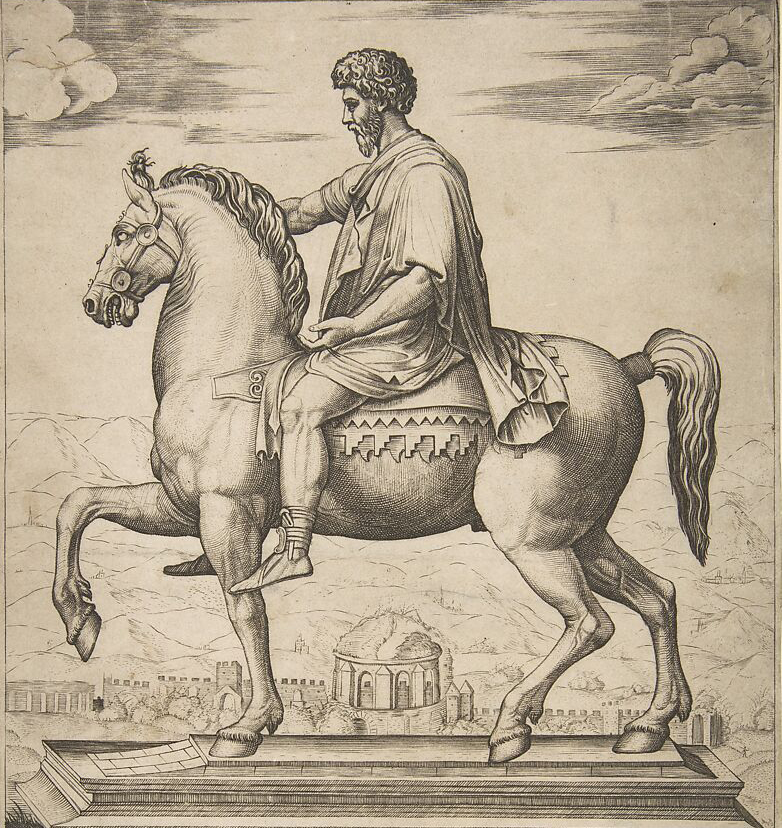
Marcus Aurelius
121–180 AD
Marcus Aurelius (121–180 AD) was a Roman emperor and a prominent philosopher of the Stoic school. Born into a patrician family, he ascended to the Roman throne in 161 AD and ruled until his death. Known as one of the “Five Good Emperors,” Aurelius is celebrated for his just rule and commitment to the principles of Stoic philosophy, which emphasized reason, self-discipline, and virtue as the highest goods.\n\nHis reign was marked by military conflict and internal strife, yet he remained deeply committed to governance aligned with philosophical ideals, striving to embody the Stoic wise man as ruler. His philosophical inclinations not only shaped his personal life but also influenced his administrative policies and his approach to leadership.\n\nMarcus Aurelius is best known for his work “Meditations,” a series of personal writings that he penned while on military campaigns in the Balkans and in Asia Minor. These reflections, originally written in Greek, were not intended for publication but rather as a source of personal guidance and self-improvement. “Meditations” serves as a remarkable example of philosophical journaling and offers insight into the mind of a Roman emperor contending with immense responsibility and existential reflection.\n\nThe work is divided into 12 books, each a collection of thoughts and aphorisms that illustrate Aurelius’ commitment to Stoic philosophy, focusing on themes of impermanence, the nature of the soul, and the pursuit of virtue amidst the trials of life. Aurelius’ “Meditations” remains a seminal text in the study of Stoic philosophy and is lauded for its timeless wisdom and practical advice on leading a meaningful life.
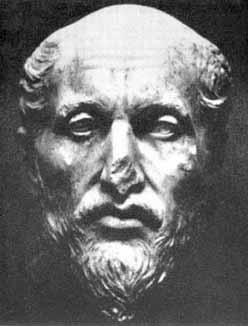
Proclus
412–485 CE
Proclus (412–485 CE) was a Neoplatonist philosopher and mathematician who played a pivotal role in the development of Neoplatonism, a philosophical school that synthesized elements of Plato’s thought with other philosophical and religious traditions. Born in Constantinople, Proclus studied under the renowned Neoplatonist philosopher Syrianus and later became the head of the Platonic Academy in Athens.\n\nProclus’s philosophical works delve into a wide range of topics, including metaphysics, theology, cosmology, ethics, and mathematics. He sought to provide a comprehensive and systematic understanding of reality, drawing on the insights of Plato, Aristotle, and other earlier philosophers. His most significant works include “Elements of Theology,” “Commentary on the Timaeus,” and “Commentary on the Republic.”\n\nProclus’s philosophy is characterized by its intricate and complex system of emanation, in which all things derive from the One, the ultimate source of being. This system involves a series of intermediate levels or hypostases, through which the One unfolds into the diversity of the cosmos. Proclus also emphasized the importance of mystical experience and the union of the soul with the divine. His writings have had a lasting impact on subsequent philosophical and theological thought, particularly in the Byzantine and Islamic worlds.
Rumi
1207–1273
Jalāl ad-Dīn Muhammad Rūmī was a 13th-century Persian poet, Islamic scholar, and Sufi mystic. His poetry has influenced the world and his Masnavi is regarded as one of the greatest works of mystical literature.
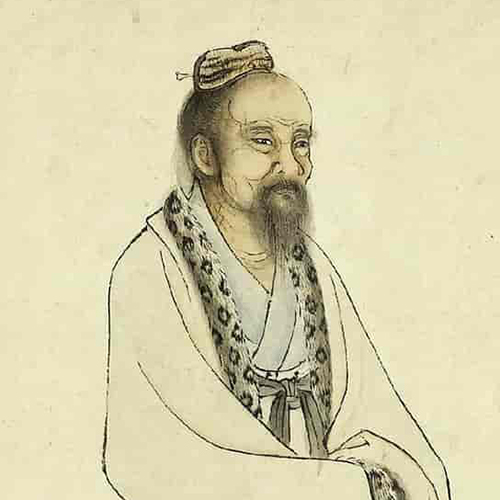
Zhuang Zhou
4th century BCE
Zhuang Zhou, also known as Zhuangzi, was an influential Chinese philosopher who lived during the Warring States period, around the 4th century BCE. He is considered one of the founding figures of Daoism, a philosophy and spiritual tradition that emphasizes living in harmony with the Dao, or the fundamental nature of the universe. Zhuangzi’s writings, often characterized by their wit, humor, and allegorical style, explore themes such as the relativity of human perception, the limitations of language, and the pursuit of spiritual freedom. His most famous work, “The Zhuangzi,” is a collection of stories and parables that challenge conventional wisdom and encourage a spontaneous, effortless way of living.