
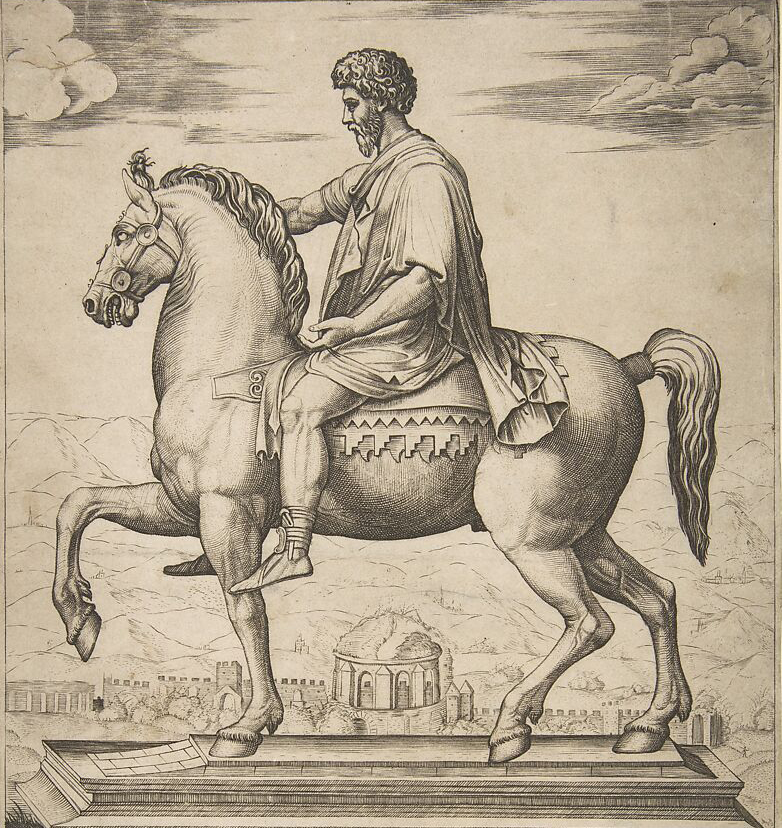
Marcus Aurelius
121–180 AD
Marcus Aurelius (121–180 AD) was a Roman emperor and a prominent philosopher of the Stoic school. Born into a patrician family, he ascended to the Roman throne in 161 AD and ruled until his death. Known as one of the “Five Good Emperors,” Aurelius is celebrated for his just rule and commitment to the principles of Stoic philosophy, which emphasized reason, self-discipline, and virtue as the highest goods.\n\nHis reign was marked by military conflict and internal strife, yet he remained deeply committed to governance aligned with philosophical ideals, striving to embody the Stoic wise man as ruler. His philosophical inclinations not only shaped his personal life but also influenced his administrative policies and his approach to leadership.\n\nMarcus Aurelius is best known for his work “Meditations,” a series of personal writings that he penned while on military campaigns in the Balkans and in Asia Minor. These reflections, originally written in Greek, were not intended for publication but rather as a source of personal guidance and self-improvement. “Meditations” serves as a remarkable example of philosophical journaling and offers insight into the mind of a Roman emperor contending with immense responsibility and existential reflection.\n\nThe work is divided into 12 books, each a collection of thoughts and aphorisms that illustrate Aurelius’ commitment to Stoic philosophy, focusing on themes of impermanence, the nature of the soul, and the pursuit of virtue amidst the trials of life. Aurelius’ “Meditations” remains a seminal text in the study of Stoic philosophy and is lauded for its timeless wisdom and practical advice on leading a meaningful life.