
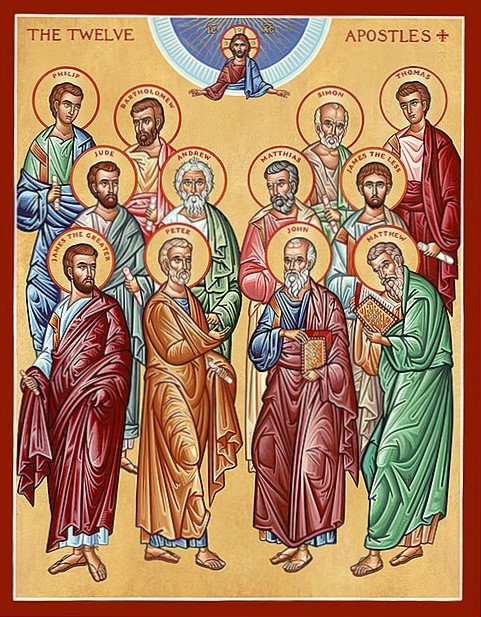
There are two paths, one of life and one of death, and the difference is great between the two paths.
Didache
The Didache, or “The Teaching of the Twelve Apostles,” is an early Christian document dating to the first century. The text begins with a discussion of the “Two Ways,” contrasting the path of life, characterized by love of God and neighbor, with the path of death, marked by sin and vice.
The Didache also includes instructions for rituals such as baptism, Eucharist, fasting, and prayer, stressing the importance of communal worship and the proper conduct of Christian leaders. The text is valued for its insights into early Christians’ ethical and liturgical practices, reflecting a community striving to live according to Jesus’s teachings.
Unable to load audio
Fast on behalf of those that persecute you; for what thank is there if ye love them that love you? Do not even the Gentiles do the same? But love them that hate you, and ye will not have an enemy.
If any one give thee a blow on thy right cheek, turn unto him the other also, and thou shalt be perfect; if any one compel thee to go a mile, go with him two; if a man take away thy cloak, give him thy coat also; if a man take from thee what is thine, ask not for it again, for neither art thou able to do so.
Thou shalt not kill; thou shalt not commit adultery; thou shalt not corrupt youth; thou shalt not commit fornication; thou shalt not steal; thou shalt not use soothsaying; thou shalt not practise sorcery; thou shalt not kill a child by abortion, neither shalt thou slay it when born; thou shalt not covet the goods of thy neighbor.
Thou shalt not commit perjury; thou shalt not bear false witness; thou shalt not speak evil; thou shalt not bear malice; thou shalt not be double-minded or double-tongued, for to be double-tongued is the snare of death.
Blessed is he who giveth according to the commandment, for he is free from guilt; but woe unto him that receiveth.
Thou shalt not hate any man, but some thou shalt confute, concerning some thou shalt pray, and some thou shalt love beyond thine own soul.
Now the path of life is this — first, thou shalt love the God who made thee, thy neighbour as thyself, and all things that thou wouldest not should be done unto thee, do not thou unto another.
Give to every one that asketh of thee, and ask not again, for the Father wishes that from his own gifts there should be given to all.
My child, be not lustful, for lust leadeth unto fornication; be not a filthy talker; be not a lifter up of the eye, for from all these things come adulteries.
My child, be not a liar, for lying leadeth unto theft; be not covetous or conceited, for from all these things thefts arise.
My child, be not an observer of omens, since it leadeth to idolatry, nor a user of spells, nor an astrologer, nor a travelling purifier, nor wish to see these things, for from all these things idolatry ariseth.
My child, be not a murmurer, since it leadeth unto blasphemy; be not self-willed or evil-minded, for from all these things blasphemies are produced.
Be thou meek, for the meek shall inherit the earth; be thou long-suffering, and compassionate, and harmless, and peaceable, and good, and fearing always the words that thou hast heard.
Thou shalt not exalt thyself, neither shalt thou put boldness into thy soul.
Thy soul shall not be joined unto the lofty, but thou shalt walk with the just and humble.
Accept the things that happen to thee as good, knowing that without God nothing happens.
Thou shalt seek out day by day the favour of the saints, that thou mayest rest in their words.
My child, thou shalt remember both night and day him that speaketh unto thee the Word of God; thou shalt honour him as thou dost the Lord, for where the teaching of the Lord is given, there is the Lord.
Thou shalt not desire schism, but shalt set at peace them that contend; thou shalt judge righteously; thou shalt not accept the person of any one to convict him of transgression.
Be not a stretcher out of thy hand to receive, and a drawer of it back in giving. If thou hast, give by means of thy hands a redemption for thy sins.
Thou shalt not doubt to give, neither shalt thou murmur when giving; for thou shouldest know who is the fair recompenser of the reward.
Thou shalt not remove thine heart from thy son or from thy daughter, but from their youth shalt teach them the fear of God.
Thou shalt not turn away from him that is in need, but shalt share with thy brother in all things, and shalt not say that things are thine own; for if ye are partners in what is immortal, how much more in what is mortal?
Thou shalt confess thy transgressions in the church, and shalt not come unto prayer with an evil conscience. This is the path of life.
Thou shalt hate all hypocrisy and everything that is not pleasing to God; thou shalt not abandon the commandments of the Lord, but shalt guard that which thou hast received, neither adding thereto nor taking therefrom.
See that no one make thee to err from this path of doctrine, since he who doeth so teacheth thee apart from God.
If thou art able to bear the whole yoke of the Lord, thou wilt be perfect; but if thou art not able, what thou art able, that do.
Keep with care from things sacrificed to idols, for it is the worship of the infernal deities.
But concerning baptism, thus baptize ye: having first recited all these precepts, baptize in the name of the Father, and of the Son, and of the Holy Spirit, in running water; but if thou hast not running water, baptize in some other water, and if thou canst not baptize in cold, in warm water; but if thou hast neither, pour water three times on the head, in the name of the Father, and of the Son, and of the Holy Spirit.
Thou shalt command him who is baptized to fast one or two days before.
Neither pray ye as the hypocrites, but as the Lord hath commanded in his Gospel so pray ye: Our Father in heaven, hallowed be thy name. Thy kingdom come. Thy will be done as in heaven so on earth. Give us this day our daily bread. And forgive us our debt, as we also forgive our debtors. And lead us not into temptation, but deliver us from the evil: for thine is the power, and the glory, for ever.
Concerning the Eucharist, after this fashion give ye thanks. First, concerning the cup. We thank thee, our Father, for the holy vine, David thy Son, which thou hast made known unto us through Jesus Christ thy Son; to thee be the glory for ever.
Let none eat or drink of your Eucharist but such as have been baptized into the name of the Lord, for of a truth the Lord hath said concerning this, Give not that which is holy unto dogs.
We thank thee, holy Father, for thy holy name, which thou hast caused to dwell in our hearts, and for the knowledge and faith and immortality which thou hast made known unto us through Jesus thy Son; to thee be the glory for ever.
Above all, we thank thee that thou art able to save; to thee be the glory for ever.
Let grace come, and let this world pass away. Hosanna to the Son of David.
But concerning the apostles and prophets, thus do ye according to the doctrine of the Gospel. Let every apostle who cometh unto you be received as the Lord.
Let the apostle when departing take nothing but bread until he arrive at his resting-place; but if he ask for money, he is a false prophet. He will remain one day, and if it be necessary, a second; but if he remain three days, he is a false prophet.
Ye shall not attempt or dispute with any prophet who speaketh in the spirit; for every sin shall be forgiven, but this sin shall not be forgiven.
Not every one who speaketh in the spirit is a prophet, but he is so who hath the disposition of the Lord; by their disposition they therefore shall be known, the false prophet and the prophet.
Let every one that cometh in the name of the Lord be received, but afterwards ye shall examine him and know his character, for ye have knowledge both of good and evil.
But if he wish to settle with you, being a craftsman, let him work, and so eat; but if he know not any craft, provide ye according to your own discretion, that a Christian may not live idle among you.
Thou shalt, therefore, take the first-fruits of every produce of the wine-press and threshing-floor, of oxen and sheep, and shalt give it to the prophets, for they are your chief priests; but if ye have not a prophet, give it unto the poor.
But let not any one who hath a quarrel with his companion join with you, until they be reconciled, that your sacrifice may not be polluted.
In every place and time offer unto me a pure sacrifice, for I am a great King, saith the Lord, and my name is wonderful among the Gentiles.
Watch concerning your life; let not your lamps be quenched or your loins be loosed, but be ye ready, for ye know not the hour at which our Lord cometh. But be ye gathered together frequently, seeking what is suitable for your souls; for the whole time of your faith shall profit you not, unless ye be found perfect in the last time.
Elect, therefore, for yourselves bishops and deacons worthy of the Lord, men who are meek and not covetous, and true and approved, for they perform for you the service of prophets and teachers. Do not, therefore, despise them, for they are those who are honoured among you, together with the prophets and teachers. Rebuke one another, not in wrath, but peaceably, as ye have commandment in the Gospel; and let no one speak to any one who walketh disorderly with regard to his neighbour, neither let him be heard by you until he repent.
For in the last days false prophets and seducers shall be multiplied, and the sheep shall be turned into wolves, and love shall be turned into hate; and because iniquity aboundeth they shall hate each other, and persecute each other, and deliver each other up; and then shall the Deceiver of the world appear as the Son of God, and shall do signs and wonders, and the earth shall be delivered into his hands; and he shall do unlawful things, such as have never happened since the beginning of the world. Then shall the creation of man come to the fiery trial of proof, and many shall be offended and shall perish; but they who remain in their faith shall be saved by the rock of offense itself. And then shall appear the signs of the truth; first the sign of the appearance in heaven, then the sign of the sound of the trumpet; and thirdly, the resurrection of the dead — not of all, but as it has been said, The Lord shall come and all his saints with him; then shall the world behold the Lord coming on the clouds of heaven.
You May Also Enjoy
Gospel of Thomas
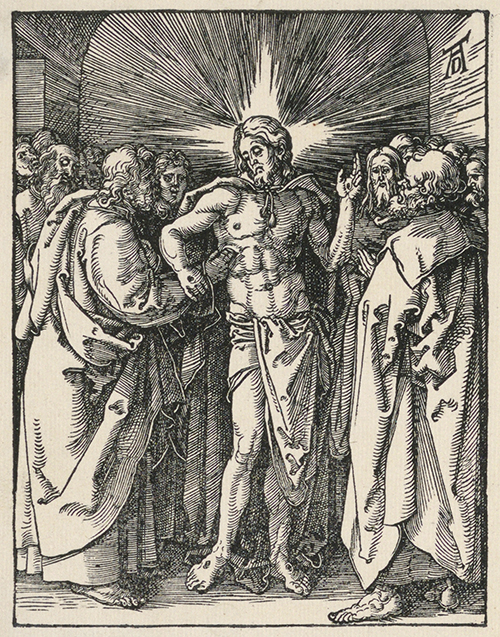
The Gospel of Thomas is a non-canonical early Christian text discovered in 1945, comprising 114 sayings, or logia, ascribed to Jesus. Unlike canonical Gospels, it doesn’t narrate Jesus’s life, death, or resurrection, instead emphasizing spiritual wisdom and introspective spirituality.
Many of its sayings parallel those in the New Testament, but others are unique, cryptic, fostering personal interpretation. A notable theme is the divine within individuals and ‘knowing oneself’ to find the ‘Kingdom of Heaven’. A typical saying, 113, states, “The kingdom of the Father is spread out upon the earth, and people do not see it.”
Though not included in most Christian bibles due to its non-canonical status and late discovery, the Gospel of Thomas offers an alternative perspective on early Christian thought, focusing less on institutionalized religion and more on individual spiritual exploration. It doesn’t echo key Christian concepts like original sin or Jesus as the messiah, making it a distinct piece in early Christian literature.
Adornment of the Spiritual Marriage
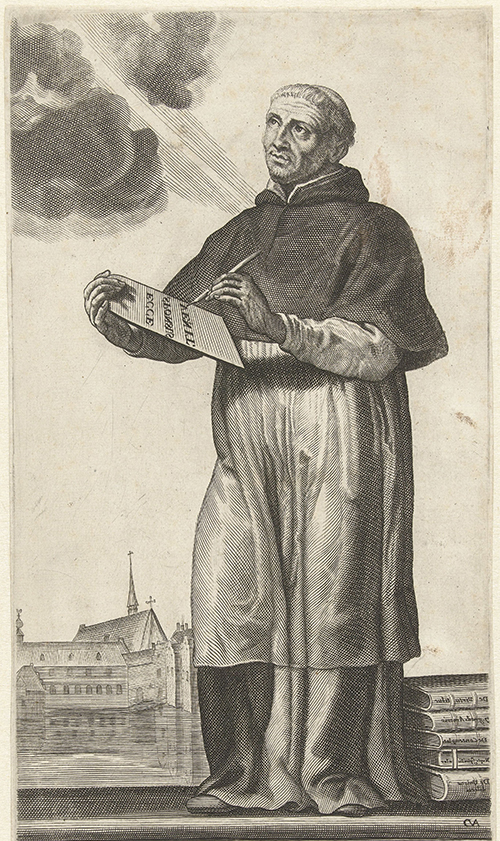
The Adornment of the Spiritual Marriage by Jan van Ruusbroec (1293-1381), a monk, writer, and mystic, outlines a mystical journey of the soul’s union with God, with Christ as the Bridegroom. Ruusbroec describes this path through stages of virtue—humility, charity, obedience, and others—emphasizing both active and contemplative practices.
Through cultivating a pure heart and soul, individuals strive to achieve unity with God, guided by these principles. This journey ultimately aims at divine oneness, reflecting Ruusbroec’s profound contributions to Christian mysticism.
Gospel of Mary
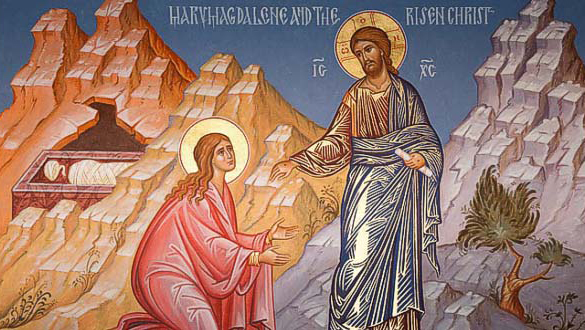
The Gospel of Mary, an early Christian Gnostic text discovered in the late 19th century, centers on a dialogue between Mary Magdalene and the other disciples of Jesus after his resurrection. In this text, Mary Magdalene is presented as a leading disciple, uniquely understanding Jesus's teachings.
The text explores the nature of the soul, spiritual salvation, and the process of achieving gnosis or direct knowledge of God. Mary describes a vision she had of Jesus, who imparts teachings on the ascent of the soul past hostile powers seeking to hinder its progress towards eternal life.
It also contains discussions about the errors of religious hierarchies and the value of personal, experiential knowledge of the divine. The Gospel of Mary challenges conventional gender and authority structures, emphasizing the equal worth of all followers of Christ's teachings.