
All nature, all things formed, and all creatures exist in and with one another, and they will be dissolved again into their own elements (origins). This is because it is the nature of matter to return to its original elements.
Gospel of Mary
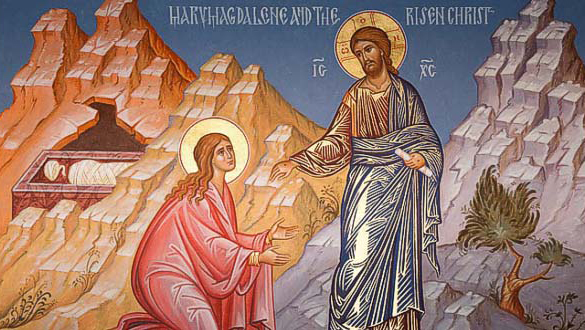
The Gospel of Mary, an early Christian Gnostic text discovered in the late 19th century, centers on a dialogue between Mary Magdalene and the other disciples of Jesus after his resurrection. In this text, Mary Magdalene is presented as a leading disciple, uniquely understanding Jesus's teachings.
The text explores the nature of the soul, spiritual salvation, and the process of achieving gnosis or direct knowledge of God. Mary describes a vision she had of Jesus, who imparts teachings on the ascent of the soul past hostile powers seeking to hinder its progress towards eternal life.
It also contains discussions about the errors of religious hierarchies and the value of personal, experiential knowledge of the divine. The Gospel of Mary challenges conventional gender and authority structures, emphasizing the equal worth of all followers of Christ's teachings.
Unable to load audio
That is why the Good came to be among you. He came to restore every nature to its basic root. You become sick and die because you did not have access to (knowledge of) Him who can heal you.
The material world produced a great passion (desire or suffering) without equal. This was contrary to the natural balance. The entire cosmos (body) was disturbed by it. That is why I said to you, be encouraged, and if you are discouraged be encouraged when you see the different forms nature has taken.
Beware that no one deceives you by saying, Look (he is) here or look (he is) there. The Son of Man is within you. Follow Him there. Those who seek Him will find Him. Go now and preach the gospel (this good news) of the Kingdom.
Desire (a lesser god) said, "Before, I did not see you descending, but now I see you ascending. Why do you lie since you belong to me?" The soul answered and said, "I saw you but you did not see me nor recognize me. I covered you like a garment and you did not know me." When it said this, the soul went away greatly rejoicing.
Again it came to the third power (lesser god), which is called Ignorance. The power questioned the soul, saying, "Where are you going? You are enslaved (captured) in wickedness. Since you are its captive you cannot judge (have no judgment)." And the soul said, "Why do you judge me, when I have not judged?". "I was captured, although I have not captured anyone." "I was not recognized. But I have recognized that God (the All) is in (being dissolved) both the earthly things and in the heavenly (things)."
When the soul had overcome the third power, it ascended and saw the fourth power, which took seven forms. The first form is darkness, the second desire, the third ignorance, the fourth is the lust of death, the fifth is the dominion of the flesh, the sixth is the empty useless wisdom of flesh, the seventh is the wisdom of vengeance and anger. These are the seven powers of wrath.
They asked the soul, "Where do you come from, slayer of men: where are you going, conqueror of space?" The soul answered and said, "What has trapped me has been slain, and what kept me caged has been overcome." "My desire has been ended, and ignorance has died." "In an age (dispensation) I was released from the world in a symbolic image, and I was released from the chains of oblivion, which were only temporary (in this transient world)." "From this time on will, I will attain the rest of the ages and seasons of silence."
You May Also Enjoy
Gospel of Thomas
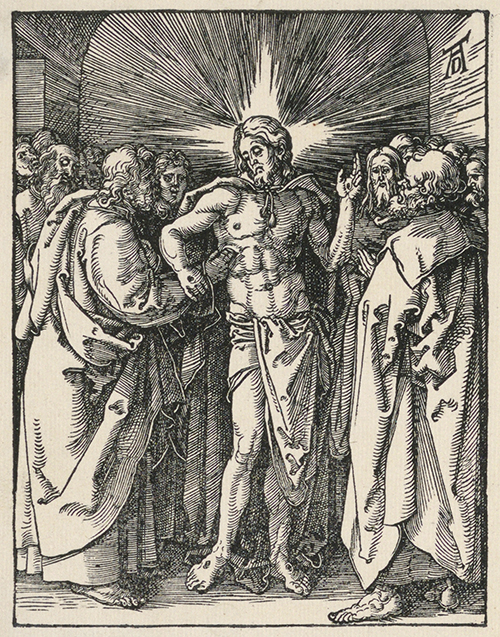
The Gospel of Thomas is a non-canonical early Christian text discovered in 1945, comprising 114 sayings, or logia, ascribed to Jesus. Unlike canonical Gospels, it doesn’t narrate Jesus’s life, death, or resurrection, instead emphasizing spiritual wisdom and introspective spirituality.
Many of its sayings parallel those in the New Testament, but others are unique, cryptic, fostering personal interpretation. A notable theme is the divine within individuals and ‘knowing oneself’ to find the ‘Kingdom of Heaven’. A typical saying, 113, states, “The kingdom of the Father is spread out upon the earth, and people do not see it.”
Though not included in most Christian bibles due to its non-canonical status and late discovery, the Gospel of Thomas offers an alternative perspective on early Christian thought, focusing less on institutionalized religion and more on individual spiritual exploration. It doesn’t echo key Christian concepts like original sin or Jesus as the messiah, making it a distinct piece in early Christian literature.
Adornment of the Spiritual Marriage
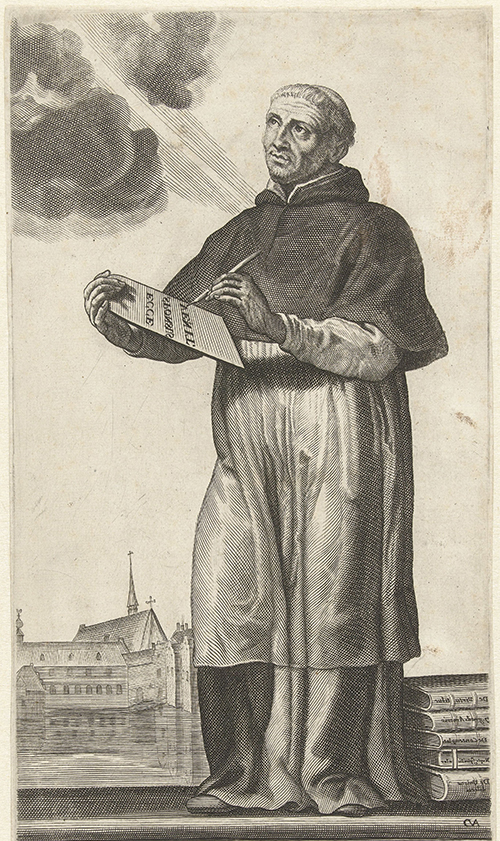
The Adornment of the Spiritual Marriage by Jan van Ruusbroec (1293-1381), a monk, writer, and mystic, outlines a mystical journey of the soul’s union with God, with Christ as the Bridegroom. Ruusbroec describes this path through stages of virtue—humility, charity, obedience, and others—emphasizing both active and contemplative practices.
Through cultivating a pure heart and soul, individuals strive to achieve unity with God, guided by these principles. This journey ultimately aims at divine oneness, reflecting Ruusbroec’s profound contributions to Christian mysticism.
Didache
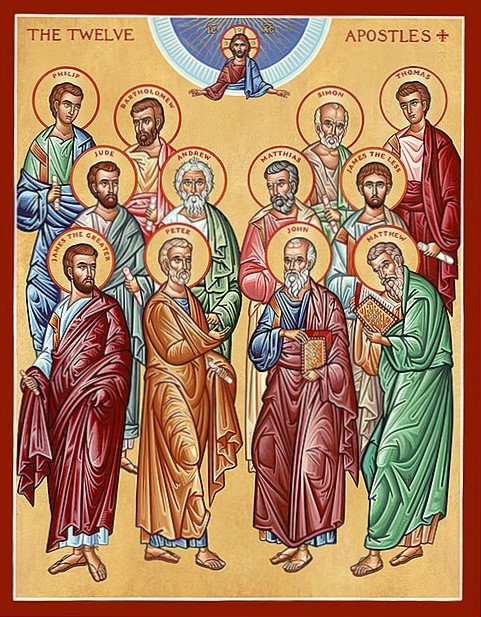
The Didache, or “The Teaching of the Twelve Apostles,” is an early Christian document dating to the first century. The text begins with a discussion of the “Two Ways,” contrasting the path of life, characterized by love of God and neighbor, with the path of death, marked by sin and vice.
The Didache also includes instructions for rituals such as baptism, Eucharist, fasting, and prayer, stressing the importance of communal worship and the proper conduct of Christian leaders. The text is valued for its insights into early Christians’ ethical and liturgical practices, reflecting a community striving to live according to Jesus’s teachings.