
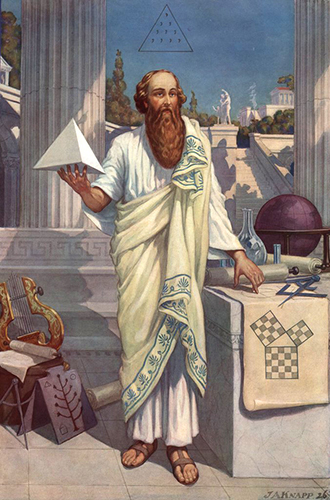
First worship the Immortal gods, as they are established and ordained by the Law. Reverence the Oath, and next the Heroes, full of goodness and light. Honour likewise the Terrestrial Daemons by rendering them the worship lawfully due to them. Honour likewise your parents, and those most nearly related to you.
Golden Verses of Pythagoras
The Golden Verses of Pythagoras is a collection of moral exhortations that outline a path to a virtuous and fulfilling life. It emphasizes reverence for the gods, heroes, and familial respect, while encouraging friendships with virtuous individuals. Self-discipline is paramount, urging the control of passions like gluttony, sloth, and anger. Justice, reason, and self-respect are core tenets, with a call to avoid evil deeds and to act thoughtfully.
Physical health is to be maintained through moderation and a balanced lifestyle. Reflection on daily actions is recommended to foster personal growth. The text advocates for an understanding of the divine and human nature, acceptance of fate, and avoidance of unnecessary strife. By following these principles, one can attain spiritual purity, wisdom, and ultimately transcend mortal limitations, achieving a state of immortality and incorruptibility.
Unable to load audio
Of all the rest of mankind, make him your friend who distinguishes himself by his virtue. Always give ear to his mild exhortations, and take example from his virtuous and useful actions. Avoid as much as possible hating your friend for a slight fault.
Power is a near neighbour to necessity. Know that all these things are just as what I have told you; and accustom yourself to overcome and vanquish these passions: First gluttony, sloth, sensuality, and anger.
Do nothing evil, neither in the presence of others, nor privately; But above all things respect yourself. In the next place, observe justice in your actions and in your words. And do not accustom yourself to behave yourself in any thing without rule, and without reason.
But always make this reflection, that it is ordained by destiny that all men shall die. And that the goods of fortune are uncertain; and that just as they may be acquired, they may likewise be lost. Concerning all the calamities that men suffer by divine fortune, Support your lot with patience, it is what it may be, and never complain at it. But endeavour what you can to remedy it. And consider that fate does not send the greatest portion of these misfortunes to good men.
There are many sorts of reasonings among men, good and bad; Do not admire them too easily, nor reject them. But if falsehoods are advanced, hear them with mildness, and arm yourself with patience.
Observe well, on every occasion, what I am going to tell you: Do not let any man either by his words, or by his deeds, ever seduce you. Nor lure you to say or to do what is not profitable for yourself. Consult and deliberate before you act, that you may not commit foolish actions. For it is the part of a miserable man to speak and to act without reflection. But do the thing which will not afflict you afterwards, nor oblige you to repentance. Never do anything which you do not understand. But learn all you ought to know, and by that means you will lead a very pleasant life.
In no way neglect the health of your body; But give it drink and food in due measure, and also the exercise of which it needs. Now by measure I mean what will not discomfort you. Accustom yourself to a way of living that is neat and decent without luxury. Avoid all things that will occasion envy. And do not be prodigal out of season, like someone who does not know what is decent and honourable. Neither be covetous nor stingy; a due measure is excellent in these things.
Only do the things that cannot hurt you, and deliberate before you do them. Never allow sleep to close your eyelids, after you went to bed, Until you have examined all your actions of the day by your reason. In what have I done wrong? What have I done? What have I omitted that I ought to have done? If in this examination you find that you have done wrong, reprove yourself severely for it; And if you have done any good, rejoice.
Practise thoroughly all these things; meditate on them well; you ought to love them with all your heart. It is those that will put you in the way of divine virtue. I swear it by he who has transmitted into our souls the Sacred Quaternion, the source of nature, whose cause is eternal.
But never begin to set your hand to any work, until you have first prayed the gods to accomplish what you are going to begin. When you have made this habit familiar to you, You will know the constitution of the Immortal Gods and of men. Even how far the different beings extend, and what contains and binds them together.
You shall likewise know that according to Law, the nature of this universe is in all things alike, So that you shall not hope what you ought not to hope; and nothing in this world shall be hidden from you. You will likewise know, that men draw upon themselves their own misfortunes voluntarily, and of their own free choice.
Unhappy they are! They neither see nor understand that their good is near them. Few know how to deliver themselves out of their misfortunes. Such is the fate that blinds humankind, and takes away his senses. Like huge cylinders they roll back and forth, and always oppressed with innumerable ills. For fatal strife, natural, pursues them everywhere, tossing them up and down; nor do they perceive it.
Instead of provoking and stirring it up, they ought to avoid it by yielding. Oh! Jupiter, our Father! If you would deliver men from all the evils that oppress them, Show them of what daemon they make use. But take courage; the race of humans is divine. Sacred nature reveals to them the most hidden mysteries. If she impart to you her secrets, you will easily perform all the things which I have ordained thee. And by the healing of your soul, you wilt deliver it from all evils, from all afflictions.
But you should abstain from the meats, which we have forbidden in the purifications and in the deliverance of the soul; Make a just distinction of them, and examine all things well. Leave yourself always to be guided and directed by the understanding that comes from above, and that ought to hold the reins. And when, after having deprived yourself of your mortal body, you arrived at the most pure Aither, you shall be a God, immortal, incorruptible, and Death shall have no more dominion over you.
You May Also Enjoy
Elements of Theology
ProclusElements of Theology is a seminal work in Neoplatonic philosophy, composed around 450 CE. Structured as a series of 211 propositions, each accompanied by a proof, the text systematically explores the hierarchical structure of reality, beginning with the concept of the One—the ultimate principle of unity and source of all existence.
Proclus delineates the process of emanation from the One, through successive levels of reality, including the divine intellect (Nous), the World Soul, and individual souls, culminating in the material world. This framework illustrates how multiplicity arises from unity and how all entities participate in the Good.
The Elements of Theology has profoundly influenced both Eastern and Western philosophical traditions. Notably, its ideas permeated medieval thought through the Liber de Causis, an Arabic adaptation erroneously attributed to Aristotle, which was later recognized as a summary of Proclus’ work. The text remains a cornerstone for understanding Neoplatonic metaphysics and its enduring impact on subsequent philosophical and theological discourse.
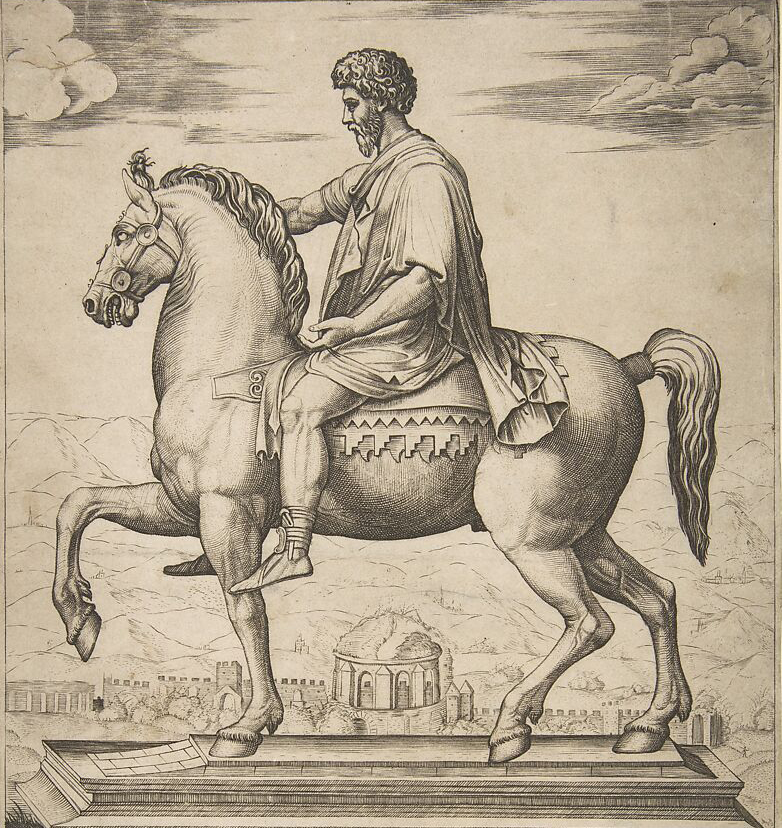
Meditations of Marcus Aurelius
Meditations by Marcus Aurelius is a collection of personal writings by the Roman Emperor, offering profound insights into Stoic philosophy. Written as a series of reflections and exercises, it emphasizes self-discipline, rationality, and virtue as the path to a tranquil life. Aurelius contemplates the impermanence of life, urging acceptance of nature's course and the inevitability of death. He advocates for inner governance, urging individuals to master their thoughts and emotions rather than be swayed by external circumstances.
The work stresses the interconnectedness of all things, the importance of living in accordance with nature, and the value of serving others with justice and kindness. Through his meditations, Aurelius seeks to maintain personal integrity, embrace the present moment, and find peace by aligning with universal principles. His writings remain a timeless guide to living a meaningful, virtuous life amidst life's challenges.